
Otumfuo Prempeh II and the Powerful Restoration of the Ashanti Kingdom’s Legacy

THIS POST MAY CONTAIN AFFILIATE LINKS. THIS MEANS WE MAY RECEIVE A COMMISSION FROM QUALIFYING PURCHASES YOU MAKE THROUGH OUR LINKS. KINDLY READ OUR DISCLOSURE NOTICE FOR MORE INFORMATION.
Otumfuo Prempeh II’s name carries weight in Ashanti history.
When he became Asantehene in 1931, the kingdom was still living with the effects of decades of colonial control.
His leadership during the 1935 restoration of the Ashanti Confederacy reestablished the monarchy’s authority and revived key traditions.
Choosing the royal title “Otumfuo” was a deliberate statement of strength and dignity, reclaiming power that the British had once tried to strip from Prempeh I.
Today, his reign stands as a lasting example of resilience, unity, and cultural pride in the Ashanti Kingdom.

Struggling to Keep Track of All Your Kumasi Adventures? No worries!
With so much to see, do, and learn in Kumasi, it’s easy for the details to get lost. Want to make the most of your explorations? Then you need this FREE Kumasi Journal Set!
It’s perfect for recording your favorite spots, and cultural experiences, and even learning key Twi words and phrases to deepen your connection to Kumasi. Whether you’re a local or a visitor, this journal makes every moment count.
Early Life and Rise to Leadership
Otumfuo Osei Tutu Agyeman Prempeh II was born in 1892, surrounded by the deep traditions of the Ashanti Kingdom.
His royal claim came through his mother, Nana Akua Bakoma, daughter of Asantehemaa Nana Yaa Akyaa.
His father, Nana Kwaku Owusu of Besease near Ejisu, was a respected chief and advisor. In the Ashanti matrilineal system, inheritance passes through the mother’s line, making Nana Akua Bakoma’s role central to his future as Asantehene.
In August 1892, a leopard was causing fear in Kumasi. Town criers moved through the streets, striking their drums and announcing the order: “Catch the leopard alive.”
Around that time, in Edweso Besease a few kilometres away, Nana Akua Bakoma went into labor.
When her son was born, he was given the name Barima Kwame Kyeretwie, meaning “one who catches a leopard alive.”
Among the Ashanti, it is not unusual for a child’s name to reflect an event that happened around their birth. In his case, the name became a symbol of courage and destiny.
He received his early education in Kumasi, blending traditional Ashanti knowledge with tools for navigating a changing colonial world.
During his formal education under colonial rule, he was also recorded in school and administrative records as Edward Prempeh Owusu (E. P. Owusu), an English-style name used in official contexts at the time.
This was common practice. Many royals and elites were listed under Anglicized names in schools, churches, or government records, without those names replacing their Akan identities.
These experiences helped shape his vision and commitment to both preserve his heritage and lead effectively in a new era.
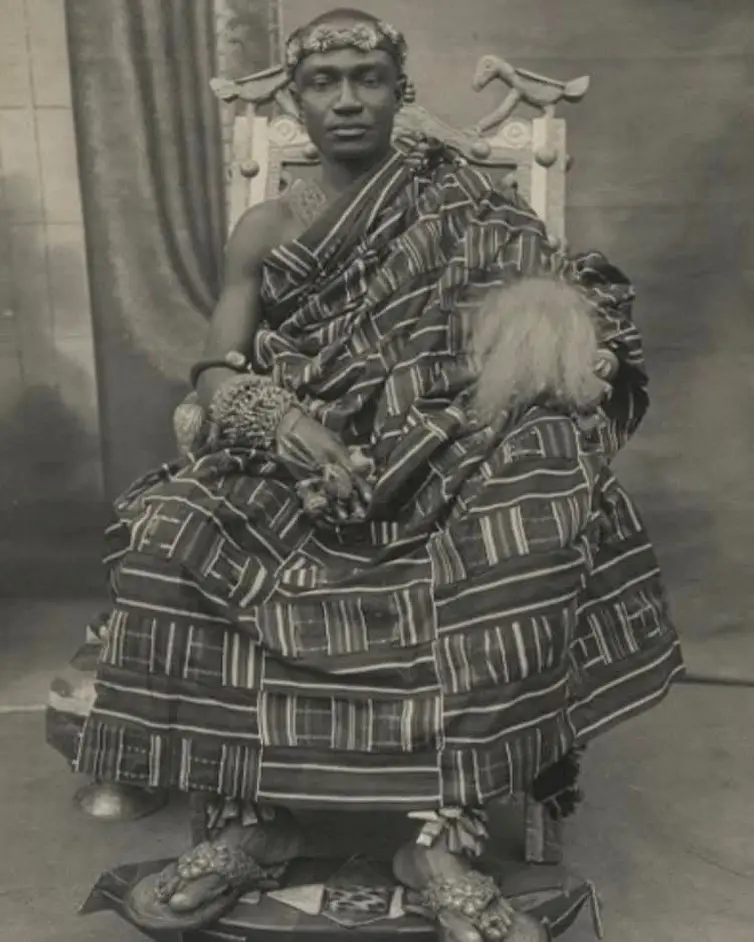
The Impact of Prempeh I’s Exile
In 1896, British authorities exiled Asantehene Prempeh I to the Seychelles. This was a major turning point for the Ashanti Kingdom.
The removal of the king was intended to weaken the kingdom’s political structure and bring it fully under colonial control.
While this action disrupted centralized leadership, it also became a rallying point for preserving traditions.
Chiefs loyal to the Golden Stool kept many customs alive, even under indirect colonial rule.
These efforts meant that when Prempeh II came to power, he could build on preserved traditions and structures, rather than having to recreate them entirely.
Restoration of the Ashanti Confederacy
In 1902, after the War of the Golden Stool, the British made Asante a protectorate called the Ashanti Crown Colony.
This meant Britain controlled major decisions, while allowing limited local governance under colonial oversight.
This conflict, in which Yaa Asantewaa played a leadership role, marked the final major armed resistance against British rule in the region.
By the 1930s, the Ashanti sought to restore centralized leadership. In 1935, the Ashanti Confederacy was formally restored.
This was both a political achievement and a cultural victory. Asantehene Prempeh II played a central role in re-establishing the council of chiefs, reaffirming the authority of the Golden Stool, and bringing unity back to the kingdom.
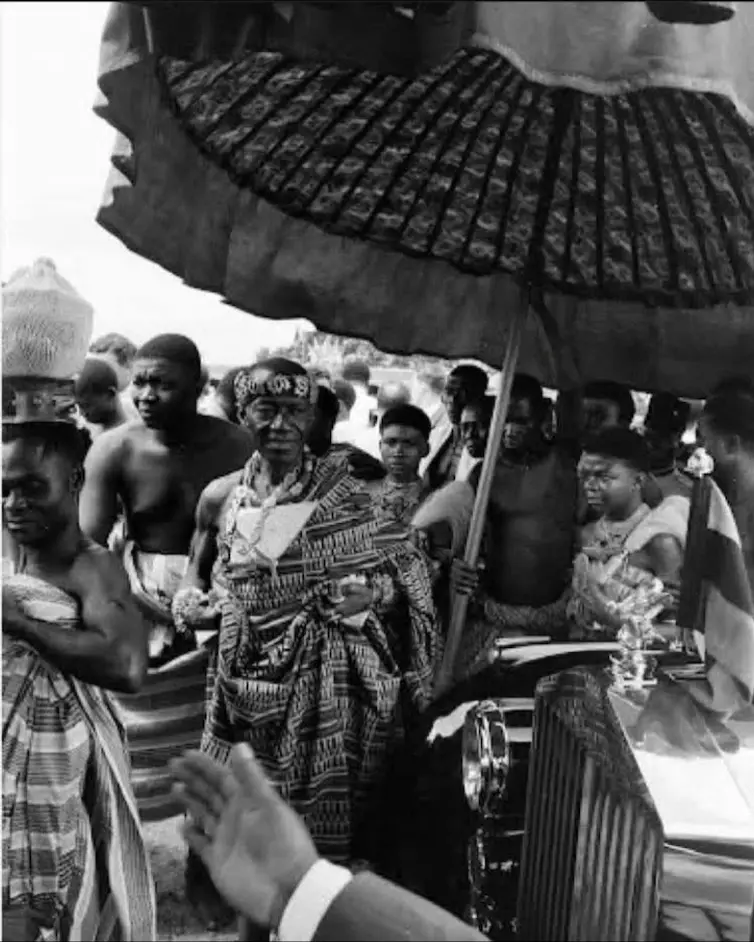
Reforming the Political Structure
Prempeh II inherited a political system weakened by decades of colonial interference. His first priority was to reunite the kingdom by restoring the authority of the council of chiefs.
Chiefs from Kumasi, Mampong, Juaben, and other regions were given a voice in governance.
Through regular Asanteman Council meetings and shared decision-making, the Asantehene and divisional chiefs addressed disputes over land, chieftaincy succession, and regional authority.
This was not a new body, but the revival of the traditional council that had been weakened under colonial rule.
Restoring its authority rebuilt trust among leaders who had been divided during the years of British control.
This cooperative governance model allowed the Ashanti to operate as a self-governing body within the colonial framework, positioning them to adapt smoothly when Ghana gained independence in 1957.
The Symbolic Adoption of the Title Otumfuo
One of Prempeh II’s most defining acts as Asantehene was his decision to formally adopt the title Otumfuo, meaning “The Powerful One.”
Earlier Asantehenes had not commonly used this title. His choice carried deep meaning in the aftermath of colonial interference, especially since the British had tried to strip Prempeh I of his names and diminish the authority of the Ashanti monarchy.
By using Otumfuo, Prempeh II sent a clear message that the dignity, sovereignty, and cultural pride of the Ashanti people remained intact.
This was an intentional act to reclaim royal power and reaffirm the prestige of the Golden Stool.
The title became a permanent part of the royal identity after his reign, symbolizing unity among Ashanti states and strength in leadership.
💡 Did You Know?
The title Otumfuo became part of the Ashanti royal tradition because of Prempeh II’s choice to use it. Every Asantehene after him, including the current king, Otumfuo Osei Tutu II, has carried it as a mark of authority and heritage.
The Role of the Golden Stool
The Golden Stool is the spiritual heart of the Ashanti Kingdom. It symbolizes unity, authority, and the soul of the Ashanti people.
Prempeh II placed the Golden Stool at the center of the restored Confederacy, making sure it was protected and honored.
At the 1935 restoration ceremony, the presence of the stool confirmed Prempeh II’s authority. By emphasizing its sacredness, he strengthened cultural unity and restored pride in Ashanti heritage.
Freemasonry and International Influence
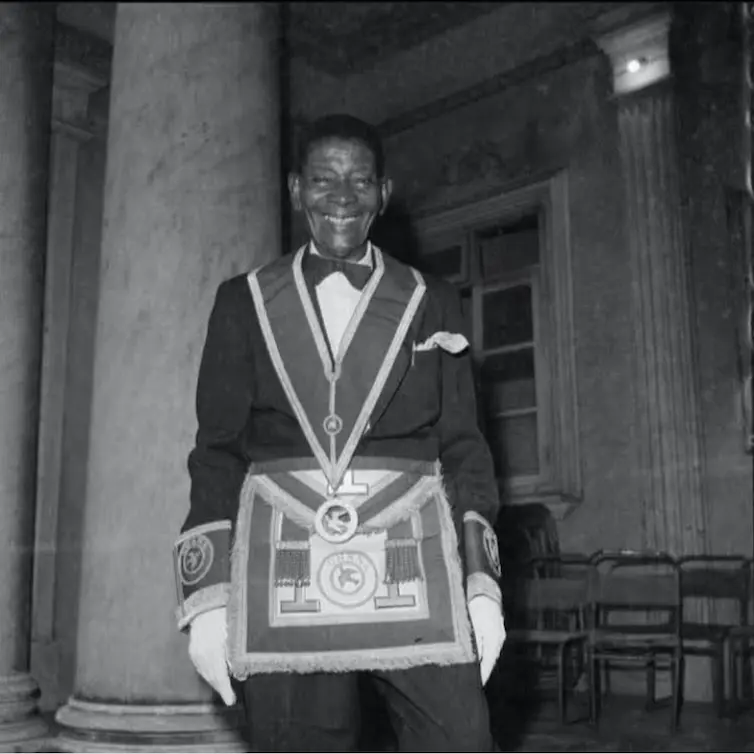
Prempeh II was a Freemason, as have been several of his successors, including the current Asantehene, Otumfuo Osei Tutu II.
Freemasonry provided him with connections to influential political and business leaders in Ghana and abroad.
It also reflected the blending of traditional Ashanti leadership with global networks during the colonial and early independence era.
Prempeh II is among the earliest photographed Asantehenes in Masonic regalia, a sign of the fraternity’s presence in the Ashanti Kingdom by the mid-20th century.
While Freemasonry had existed in the Gold Coast since the late 19th century, its visibility within Ashanti royalty grew during his reign and continued with some of his successors.
Contribution to Education and Cultural Legacy
In 1949, Prempeh II donated the land for the establishment of Prempeh College, a collaboration between the British Colonial Government and the Methodist and Presbyterian churches.
The school was named in his honor and has since become one of Ghana’s most respected secondary institutions, producing leaders across politics, business, science, and culture.
The creation of the school reflected Prempeh II’s commitment to education and his vision for an Ashanti Kingdom that balanced tradition with modern knowledge.
In 1954, the Prempeh II Jubilee Museum opened in Kumasi to honor his leadership and to showcase artifacts and history tied to the Ashanti monarchy.
This museum continues to educate visitors on Ashanti heritage and the significance of his reign.
Cultural Preservation and Modernization under Prempeh II
Prempeh II supported the continuation of ceremonies like the Adae Festival and the use of Kente cloth, Adinkra symbols, and traditional governance systems.
At the same time, he promoted modern education and infrastructure development. His leadership showed that tradition and progress could work together to strengthen a nation.
How Prempeh II Influenced Future Ashanti Kings
Later Asantehenes maintained many of the frameworks he established, including the strong role of the council of chiefs and the balance between cultural preservation and modernization.
His leadership style set a precedent that shaped the governance of the Ashanti Kingdom into the 21st century.
Ashanti in the Post-Colonial Era
The reforms and leadership style of Prempeh II positioned the Ashanti Kingdom to adapt during the political shift of Ghana’s independence in 1957.
Under his guidance, the restored council of chiefs remained active in decision-making, which allowed the kingdom to work alongside the new Ghanaian government without losing its identity.
Prempeh II also acted as a bridge between traditional governance and national politics.
He maintained close relationships with Ghana’s first leaders, including Kwame Nkrumah, so that Ashanti concerns about land, chieftaincy succession, and cultural preservation were represented at the national level.
Even as Ghana moved toward a centralized republic, the Ashanti Kingdom kept its authority over customary laws, festivals, and the protection of the Golden Stool.
The kingdom continued to serve as a unifying cultural force for Ashantis living both in Ghana and abroad.
Prempeh II’s model of leadership, grounded in tradition but open to cooperation helped keep the Ashanti monarchy respected and relevant in a modern political state.
This framework still shapes how the kingdom operates today under Otumfuo Osei Tutu II.
Enjoying This Post? Keep Exploring With Us!
If this post resonates with you, check out our store for fun, interactive ways to explore Kumasi, the Ashanti Kingdom, and the Ashanti Region. From history and culture to beginner-friendly Twi language learning, we’ve created resources to help you learn, connect, and share.

Otumfuo Prempeh II’s reign restored unity to the Ashanti Kingdom and reaffirmed the cultural importance of the Golden Stool. His leadership in governance, education, and cultural preservation left a foundation that still shapes Ashanti identity today.
Many aspects of his life, from his adoption of the title Otumfuo to his role in reviving the Ashanti Confederacy, carry stories that deserve to be remembered and passed on. If you know family accounts, photographs, or lesser-known details about Prempeh II, consider sharing them. They add to the historical record and help keep this history alive for future generations.
To explore more about Ashanti history and leaders, continue reading our related articles.
AKWAABA!! IF THIS POST CAPTURED YOUR ATTENTION, KEEP EXPLORING KUMASI WITH US AT ExploreKumasi.com. Yɛdaase!
You’ll find cultural guides, historical insights, and travel resources to help you experience Kumasi and the Ashanti Region more deeply.
💬 Want to stay connected? Join our community on Facebook to share your thoughts and discoveries.
📌 Inspired by what you read? Pin an image to come back later or share with someone planning their own Kumasi journey.
Thank you for exploring with us.





Who was Kofi Afreh to Prempeh II?
Apologies for the late reply. Kofi Afreh played a role similar to modern chief protocol figures like Mr Sarhene, – a trusted aide and coordinator , but without holding a formal stool.
Did any other royal contest the enrollment of Prempeh II?
Hmmm, the Golden Stool did remain vacant for several years after Prempeh I’s death, there is no record of a major royal dispute against Prempeh II but cannot 100% verify. If anything, then the delay was probably British control over Ashanti in that time, and not a disagreement within the royal household. Appreciate you reading and engaging with our content.